

Digital marketing has never moved this fast. And it won’t slow down. (But who knows)
Artificial Intelligence (AI) isn’t looming—it’s embedded. In workflows. In decision-making. In customer journeys. And it’s not a hypothetical trend. It’s producing a measurable impact across every channel that matters.
1. What’s Already Happening
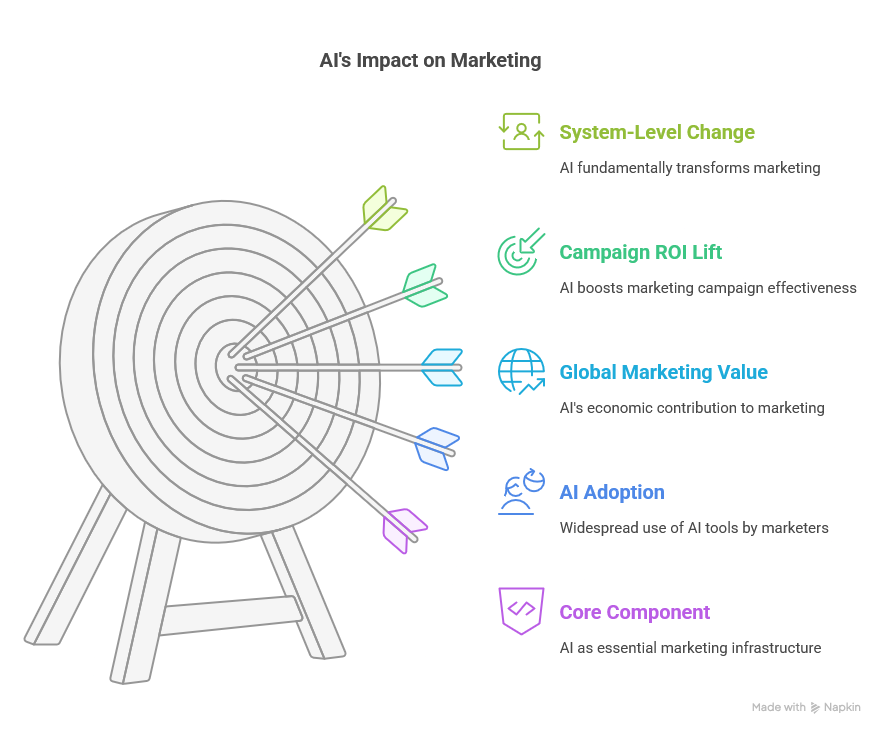
AI is now a core component of marketing infrastructure. Adoption isn’t in theory—it’s active:
- 84% of marketers already use AI tools in their operations (Salesforce, 2023).
- AI is projected to drive $407 billion in global marketing value by 2027 (Statista).
- The average company using AI in marketing has seen a 39% lift in campaign ROI (McKinsey, 2023).
That’s not a small lift. That’s a system-level change in how marketing performs.
2. Precision. Speed. Scale.
Three areas where AI is redefining the baseline:
- Real-Time Targeting
AI enables real-time bidding and adaptive audience segmentation. This means no more static personas—only dynamic profiles updated by behavior, not assumptions. - Content Optimization
Natural language processing tools adjust headlines, visuals, and formats based on live performance. In milliseconds, not meetings. - Customer Journey Intelligence
It isolates drop-off patterns, flags friction, and identifies optimal conversion paths.
This isn't about replacing people. It's about systems that can process what we can't—volume, velocity, and complexity—at scale because we aren't the system, we're the builder.
3. Outcomes That Don’t Wait
A few clear data points:
- AI-generated product recommendations drive up to 35% of Amazon’s revenue.
- AI-driven personalization can cut acquisition costs by 50% and increase marketing efficiency by 30% (BCG).
- Companies using AI-powered lead scoring convert 2x more leads on average (Forrester).
These aren’t edge cases. They represent baseline expectations in data-driven environments.
4. No Drama. Just Direction.
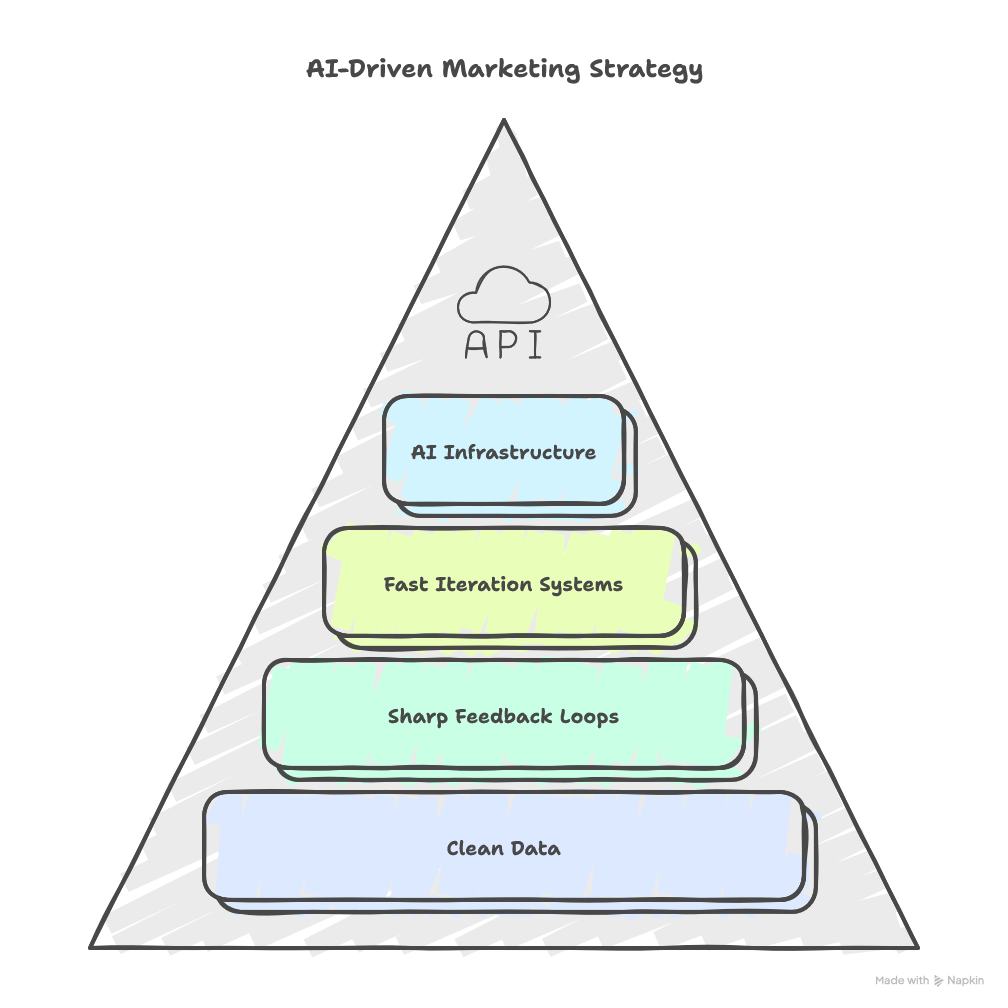
The marketing landscape is no longer about who has the best pitch. It’s about who has the cleanest data, the sharpest feedback loops, and the systems that can iterate fast.
AI isn’t “the future of marketing.” It’s just the infrastructure now.
And that means one thing: every marketing team is already operating in an AI environment—some by design, others by default.
Summary
- AI is already integrated across most major marketing systems.
- Data is no longer optional—it's the foundation.
- Speed and personalization aren't “nice to have.” They’re expected.
- Marketing teams that are structured for AI functionality are outperforming those that aren't, by the numbers.
The shift isn’t philosophical—it’s operational.
This isn’t a trend to watch. It’s a capability to understand. The timeline is not next year—it’s current.